Almost every large crypto token declined through the overnight sessions and into Thursday's U.S. open, as an oil shock drove long-dated Treasury yields to multi-year highs and traders raised the odds of a Federal Reserve rate increase next week to 64%.
Traders put a quarter-point September increase at 52.5% at 8 a.m. ET. The Bureau of Labor Statistics published August producer prices at 8:30 a.m. The same contract traded at 62.5% by 11 a.m. and 63.5% by early afternoon. Brent crude, up 11.7% in eight sessions, sits underneath both the inflation print and the yield move.
Bitcoin last changed hands at $77,120, down 2.1% over 24 hours and 5.1% over seven days, after trading between $76,748 and $78,774, according to CoinGecko data. Ether was at $2,448.88, down 1.9% on the day and 2.7% on the week. XRP fell 4.8% to $1.35; Solana declined 3.6% to $99.69; BNB dropped 4.4% to $708.37. Total crypto market value stood at $2.64 trillion on $94.2 billion of volume, with bitcoin dominance at 58.5%.
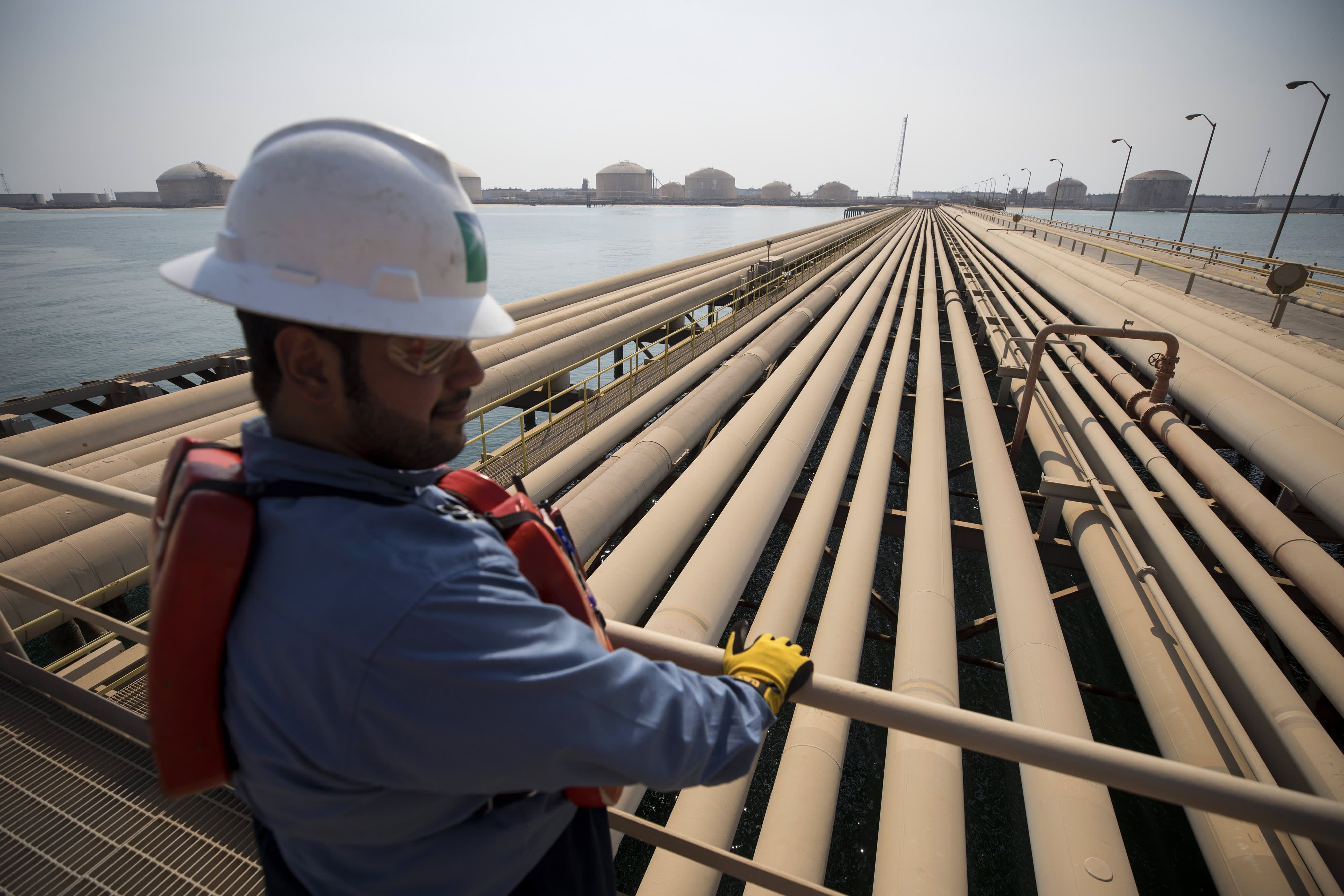
Brent crude traded at $106.83 a barrel on Thursday afternoon, up 5.6% on the day and its highest level since May 19. The contract has risen 11.7% since Sept. 2, when it settled at $95.63.
Tanker Strikes and Shipping Advisory
U.S. Central Command said on Sept. 8 that its forces "destroyed five Iranian crude oil carriers, Sept. 8, after the Islamic Revolutionary Guard Corps (IRGC) targeted a U.S. Navy warship with ballistic missiles twice over the past two days," according to the command's public release. The release names the M/T Kaviz, M/T Charminar, M/T Horizon 1, M/T Riesco and M/T Derya, placing four of the strikes in the Gulf of Oman and one near Kharg Island, and says crews were directed to abandon ship before the vessels were hit. It does not mention the Strait of Hormuz. A Sept. 5 release describes three earlier tanker strikes.
The U.S. Maritime Administration published advisory 2026-011 on Sept. 9, stating that "Iran continues to threaten and conduct strikes on commercial vessels transiting the Persian Gulf, Strait of Hormuz (SoH) and Gulf of Oman." The advisory replaced 2026-004, which expired the same day, making it a scheduled six-month renewal rather than a response to this week's strikes.