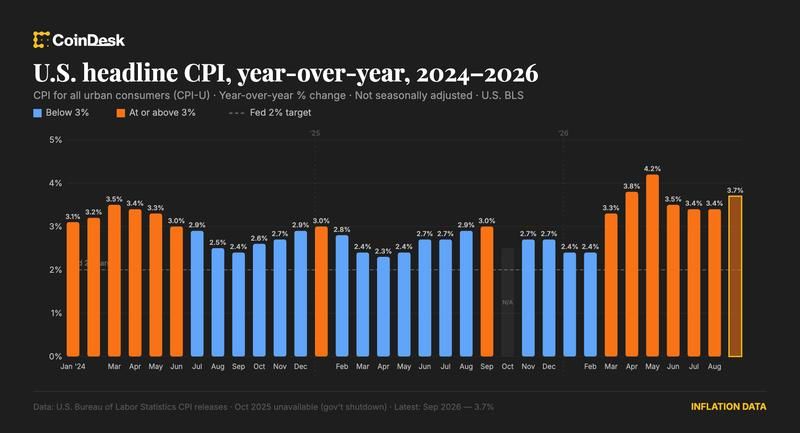
The personal consumption expenditures (PCE) price index, the Federal Reserve's preferred inflation gauge, rose a seasonally adjusted 0.2% in July, putting annual inflation at 3.7%, the Commerce Department reported Wednesday. Both figures came in 0.1 percentage point above the Dow Jones consensus.
Core PCE, which strips out volatile food and energy costs, rose 0.2% for the month and 3.3% annually, in line with forecasts. The Fed considers both measures but generally views core inflation as the better gauge of longer-term trends.
The report also showed personal income rose 0.4% and spending increased 0.2%, both stronger than expected.
- Goods prices declined 0.1% on the month, driven by a 2.7% drop in gasoline and other energy-related goods and a 0.9% decline in furnishings and long-lasting household equipment.
- Services prices rose 0.3%, pushed by a 1.2% increase in financial services and insurance and a 0.3% gain in housing.
Stock market futures pulled back slightly after the release while Treasury yields moved higher.
Fed policy outlook
The report arrives as Fed officials weigh their next policy move, with inflation still well above the central bank's 2% goal despite generally soft monthly readings this summer. The Federal Open Market Committee is not meeting formally in August and will next gather on Sept. 15-16. Markets are pricing in about a 1-in-3 probability of a move at that meeting, with the best chance for a rate hike coming in December.
Fed officials are gathering this week at Jackson Hole, Wyoming, for their annual symposium, with a policy speech from Chairman Kevin Warsh scheduled for Friday as the highlight. Warsh, who took office in May, has been circumspect about the future direction of policy, preferring that markets set the tone.
Government bond yields have been rising, with both the 10- and 30-year Treasurys recently hitting their highest levels since 2007. The increase stems from several factors, including investor concern about the Fed's commitment to its inflation target and debt and deficit issues with the federal budget. Treasury Secretary Scott Bessent a week ago announced an initiative to step up the department's buybacks of government debt, though market participants have expressed doubt about whether the move will meaningfully affect yields.
Source: CNBC