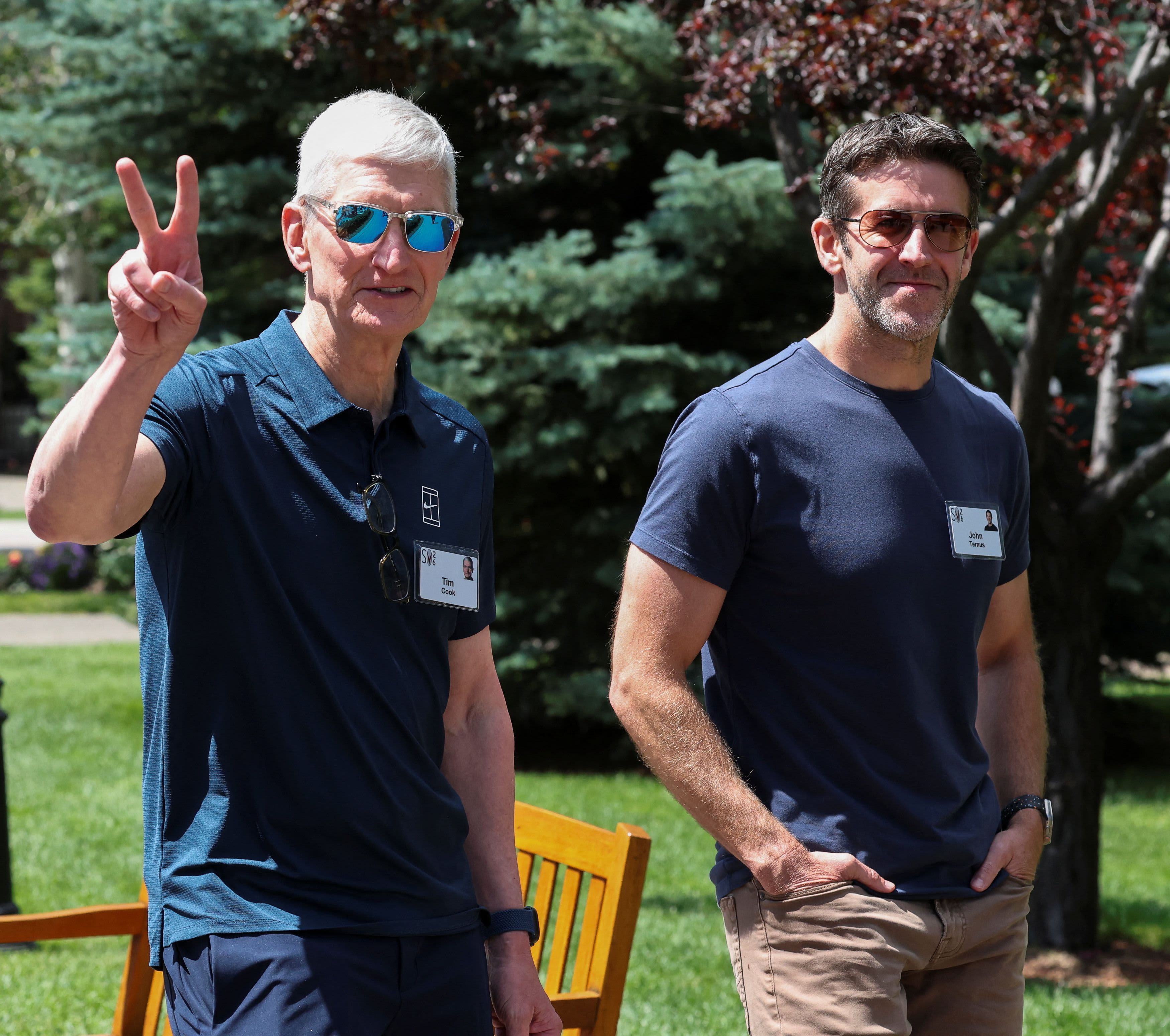
Tim Cook's final earnings call as Apple CEO takes place the same week the iPhone maker touched a $5 trillion market cap and surpassed Nvidia as the world's most valuable company.
Even with the stock trading at a record price and up 25% this year, topping its megacap peers, Apple is reckoning with a memory crunch and a rush for chip manufacturing capacity that's forcing the company to lift prices on devices. Meanwhile, Apple has still yet to launch a redesigned Siri to the public, which the article cites as the most glaring example of how far behind the company has fallen in artificial intelligence.
With Cook set to step down on Sept. 1 and assume the role of executive chairman, the emerging challenges will land in the lap of John Ternus, a 25-year Apple veteran and its head of hardware. Ternus said little on the prior earnings call in April, which came shortly after the CEO transition was announced. Investors are likely to ask more of him on Thursday, after the company reports fiscal third-quarter results. He'll become just the second CEO since Steve Jobs stepped down a few months before he died in 2011. Cook's 15-year run at the top has been highlighted by a fourteen-fold increase in the company's valuation, despite its inability to launch a major hardware platform after the iPhone and its struggle to find a big market for its high-priced Vision Pro virtual reality headset released in 2024.
"Tim Cook, he's a really talented supply chain operations guy, and I think he's done just a remarkable job of navigating the environment," said Melissa Otto, head of Visible Alpha research at S&P Global. "We'll get some visibility or some commentary at least around the current environment and how they're navigating it."
Price Hikes and Demand Concerns
Last month, Apple, citing the global memory shortage, raised starting iPad and Mac prices by at least $100, with some models increasing by more than $1,000. Analysts expect iPhone price hikes this year. Apple also announced a program with Klarna, a provider of buy now, pay later loans, that will allow customers in the U.S. to lease an iPhone for up to two years at a price starting at $17.99 per month.